Back to Projects
Systems

KUKA Robotic Bridge Fabrication

A collaborative robotic-fabrication study that translated a parametric bridge system into a KUKA-assisted rebar assembly workflow.
Robotic FabricationKUKAKUKA|prcGrasshopperParametric DesignDigital-to-Physical
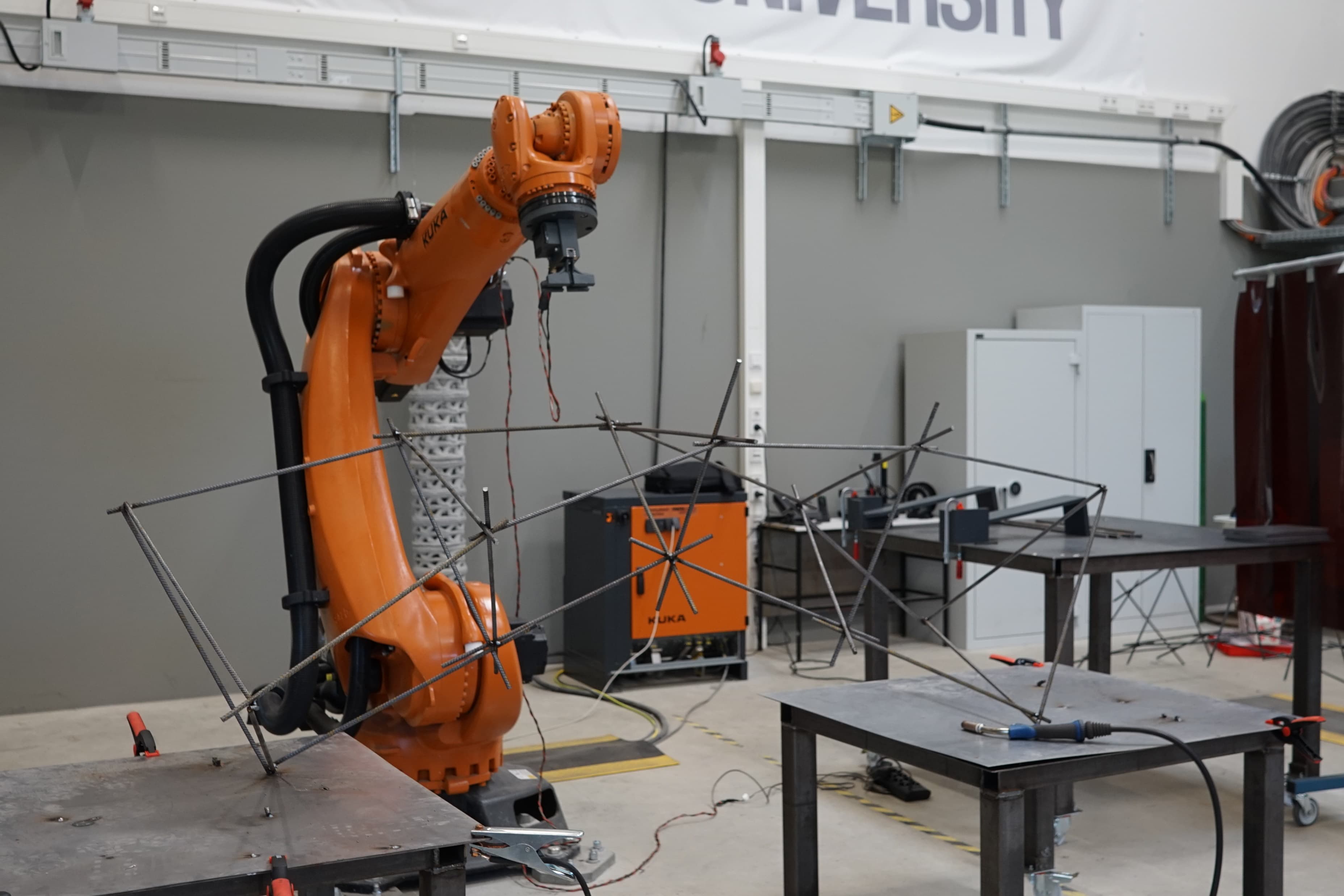
KUKA robot and completed rebar bridge assembly

KUKA Robotic Bridge Fabrication explored how a spatial concept can move from parametric logic into a physical assembly sequence. Working with a KUKA robot, the team developed a rebar bridge from repeated triangular units, tested its placement paths in simulation, and fabricated the structure through a deliberately hybrid workflow: robot-assisted positioning followed by manual welding and alignment.

  • The project developed an arching bridge structure from a repeated triangular system whose scale shifts from the edges toward the centre.
  • Its aim was to connect parametric geometry, robot simulation, and real fabrication rather than treating the digital model as a final image.
  • Standardised rebar members made the geometry legible as a buildable system and established a repeatable basis for robotic placement.
  • Contributed to the bridge concept, parametric geometry, and fabrication preparation within the course team.
  • Supported KUKA|prc simulation work used to review reach, sequence, and potential collisions before fabrication.
  • Helped document the translation from digital setup to hands-on assembly, including the relationship between robotic placement and manual welding.
  • Generated a family of rotated polygonal frames in Grasshopper, then connected them with helix-like lines to establish the bridge geometry.
  • Rationalised the model into standardised rebar lengths so the system could be fabricated as a sequence rather than a one-off sculpture.
  • Simulated robot paths and collision conditions in KUKA|prc before sending the placement workflow to the physical KUKA cell.
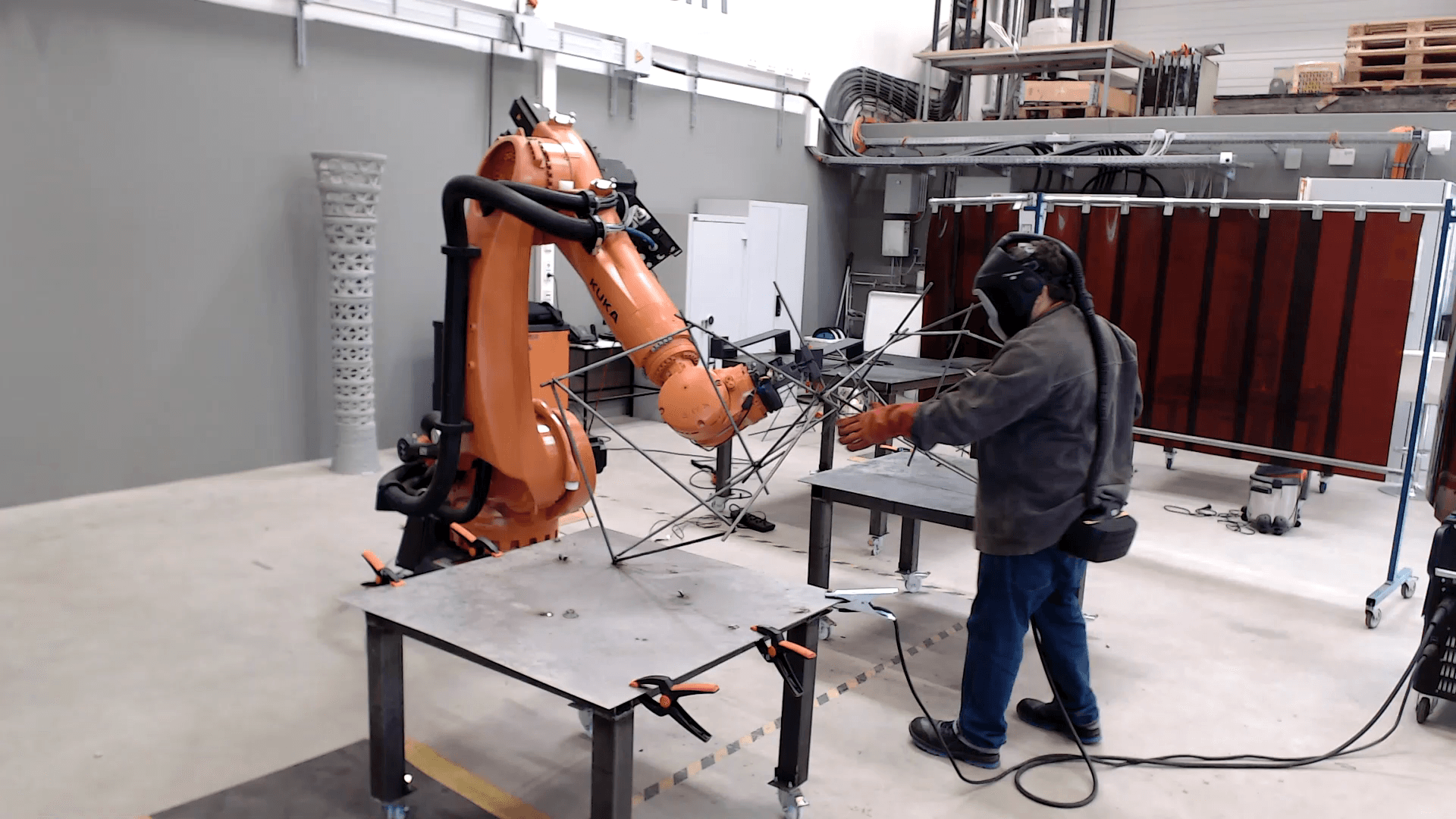
  • Combined robot-assisted pickup and positioning with manual staging, alignment, and welding at the joints.
  • Delivered a full-scale proof of the digital-to-physical workflow, from parametric model and robot simulation to a fabricated rebar bridge.
  • Made the limits of a hybrid fabrication process visible: robot placement can be repeatable, while alignment, joining, and safety checks still require careful human judgement.
  • Established a practical framework for using robotic simulation as a design and fabrication-planning tool, not only as a visualisation layer.
  • Rhino
  • Grasshopper
  • KUKA|prc
  • KUKA industrial robot
  • Rebar fabrication
  • Manual welding

Year

2022

Group

Systems

Role

Parametric Design & Fabrication Team Member

Duration

Summer semester 2022

Team

Collaborative course project

Deliverable

Robot-assisted bridge prototype and fabrication documentation

Tools

Rhino, Grasshopper, KUKA|prc, KUKA Robot, Robotic Simulation

Tags

Robotic FabricationKUKAKUKA|prcGrasshopperParametric DesignDigital-to-Physical
Story Band
Simulated KUKA robotic arm movement trajectory

Simulated Trajectory

A simulated arm trajectory previews the programmed movement path before the physical fabrication sequence is executed.

KUKA robot gripping and positioning rebar

Rebar Placement

The robot grips a rebar member, moves it into its exact position, and releases it into the growing bridge assembly.
Manual welding of the rebar bridge joints

Manual Welding

Manual welding fixes the placed members at each node, completing the material handoff between robotic positioning and human assembly.

Technical limitations and proposed automated buffer-zone workflow

From Manual to Sequential Release

The current process places rebar one member at a time. A future buffer zone could stage and release members sequentially, reducing manual handling and enabling a more continuous automated workflow.

Media, interface, and process detail

The completed bridge brings the parametric system, simulated robotic sequence, and hybrid fabrication workflow into one finished spatial structure.
The partially assembled rebar framework reveals how repeated triangular members build the bridge's structural rhythm.
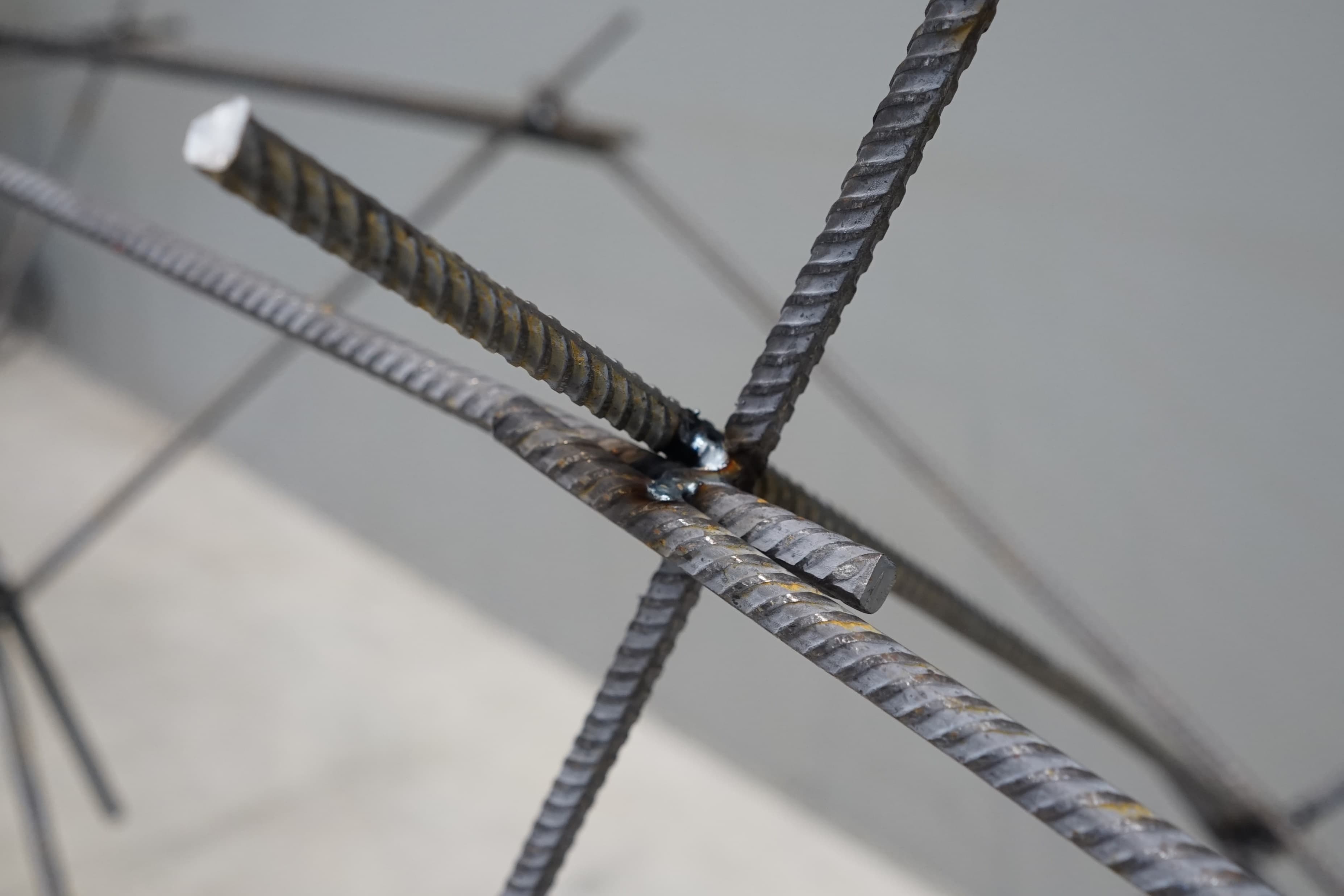
A close view of a welded joint documents the precise material connection that completes the robot-assisted placement sequence.